Renovating a commercial kitchen means working with existing infrastructure, inherited equipment, evolving regulations, and a business that often can't afford to close for long. Cleresdyne manages all of it.
A new kitchen starts with an empty shell and a blank page. A renovation starts with a room full of existing equipment, old electrical and plumbing layouts, years of wear, and a set of regulations that may have changed since the kitchen was first built.
Electrical capacity, drainage positions, gas line locations, and ventilation duct runs are already fixed. The new design has to work within these constraints, or the scope and cost of civil modifications escalates quickly.
Some existing equipment is still functional. Some looks functional but won't last another year. Some is fine mechanically but doesn't fit the new layout. Every piece needs to be assessed individually before you decide what stays and what goes.
Municipality food safety regulations evolve. A kitchen layout that was approved five or ten years ago may not comply with current requirements for zone separation, ventilation rates, or hygiene standards. The new design needs to bring the kitchen up to current code.
Many renovations happen while the restaurant is still operating, or with very tight closure windows. The work has to be planned in phases, with clear handover points, so the kitchen can get back online as quickly as possible.
Old kitchens hide things behind walls and under floors. Corroded pipes, outdated wiring, structural issues that weren't visible during the initial survey. A renovation contractor needs the experience to handle these without derailing the timeline.
Renovation budgets are almost always tighter than new-build budgets. The whole point of renovating instead of building new is to save money. That means every decision about reuse versus replacement has real financial consequences.
Before any renovation or retrofit project begins, Cleresdyne conducts a thorough assessment of every piece of equipment in the existing kitchen. We inspect each unit for mechanical condition, age, energy efficiency, compatibility with the new layout, and remaining useful life.
The goal is to reuse as much of the existing equipment as possible. Replacing everything is wasteful if half the equipment still has years of service left. At the same time, keeping a piece of equipment that's going to fail three months into the new operation is worse than replacing it upfront.
We're transparent about this: equipment assessments carry some inherent uncertainty. A unit that passes inspection may behave differently once repositioned or integrated into a new workflow. However, in our experience, the majority of equipment we approve for reuse does perform reliably for at least six months and usually well beyond that.
You get a clear report: what we recommend keeping, what we recommend replacing, and why. The final decision is always yours.
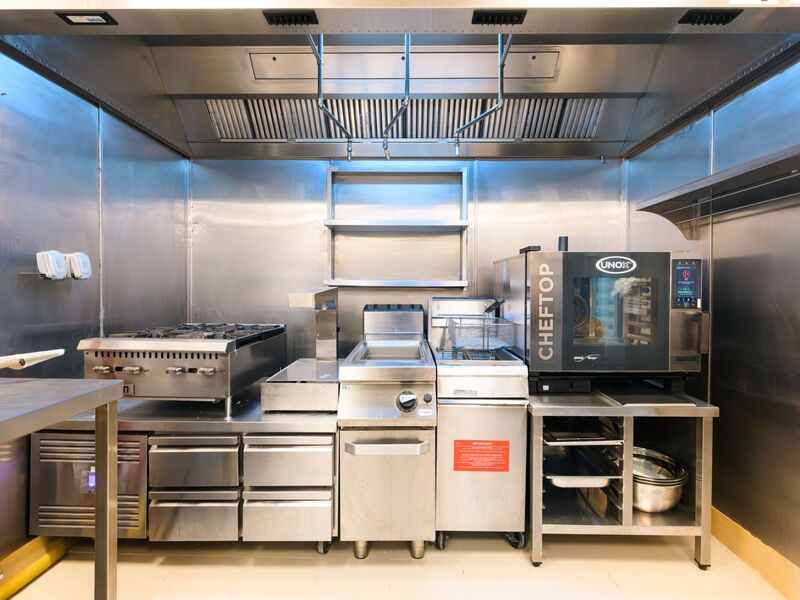
Some contractors approach renovations as an opportunity to sell an entirely new equipment package. That's not how we work. If a piece of equipment is in good condition and fits the new design, we'll tell you to keep it. The savings are better spent on improving the layout, upgrading ventilation, or investing in areas that will actually make the kitchen perform better.
What we won't do is sign off on equipment we don't believe in. If something needs replacing, we'll tell you directly and explain why.
We inspect the existing kitchen, document every piece of equipment and its condition, review the current MEP infrastructure, and identify any regulatory compliance gaps.
You receive a detailed report on what equipment can be reused, what needs replacing, and what the implications are for the new layout. We include cost estimates for both paths.
We design the renovated kitchen around the reusable equipment, current regulations, and your updated menu or concept requirements. Full MEP drawings, equipment schedules, and fabrication specs are included.
New equipment is sourced and any custom stainless steel work is fabricated. We coordinate delivery timelines so everything arrives when the kitchen is ready for installation.
Existing equipment is decommissioned and removed, outdated fittings are stripped out, new infrastructure work is completed, and the renovated kitchen is built. If phased work is needed to maintain partial operations, we plan around your schedule.
Every piece of equipment is tested, calibrated, and handed over. We provide updated compliance documentation for municipality inspections and a full service record for the renewed kitchen.
Renovations aren't just about old kitchens. Here are the situations where we most commonly get called in.
A restaurant changes its cuisine, adds a new menu section, or shifts from casual to fine dining. The existing kitchen layout no longer supports the new workflow, and the equipment mix needs to change to match the new menu.
A new operator takes over an existing restaurant space. They inherit a kitchen that was designed for a different concept. The equipment is there but the layout doesn't work for how they want to operate.
After 5 to 10 years of heavy use, a kitchen reaches the point where maintenance costs are climbing, equipment is failing more frequently, and the overall efficiency of the operation is declining. A planned renovation is more cost-effective than continuous repairs.
A municipality inspection identifies issues with the kitchen layout, ventilation, drainage, or equipment placement. The kitchen needs to be brought up to current standards to continue operating.
The restaurant is doing well and needs the kitchen to handle higher volumes. The existing layout is at capacity and needs reconfiguration, additional equipment, or upgraded infrastructure to support the growth.
An existing restaurant space is being converted to a delivery-only operation, or a non-kitchen commercial space is being converted into a cloud kitchen. The layout, ventilation, and equipment requirements are fundamentally different.
Tell us about your current kitchen and what you want it to become. We'll start with a site visit and equipment assessment, then put together a clear plan with costs.